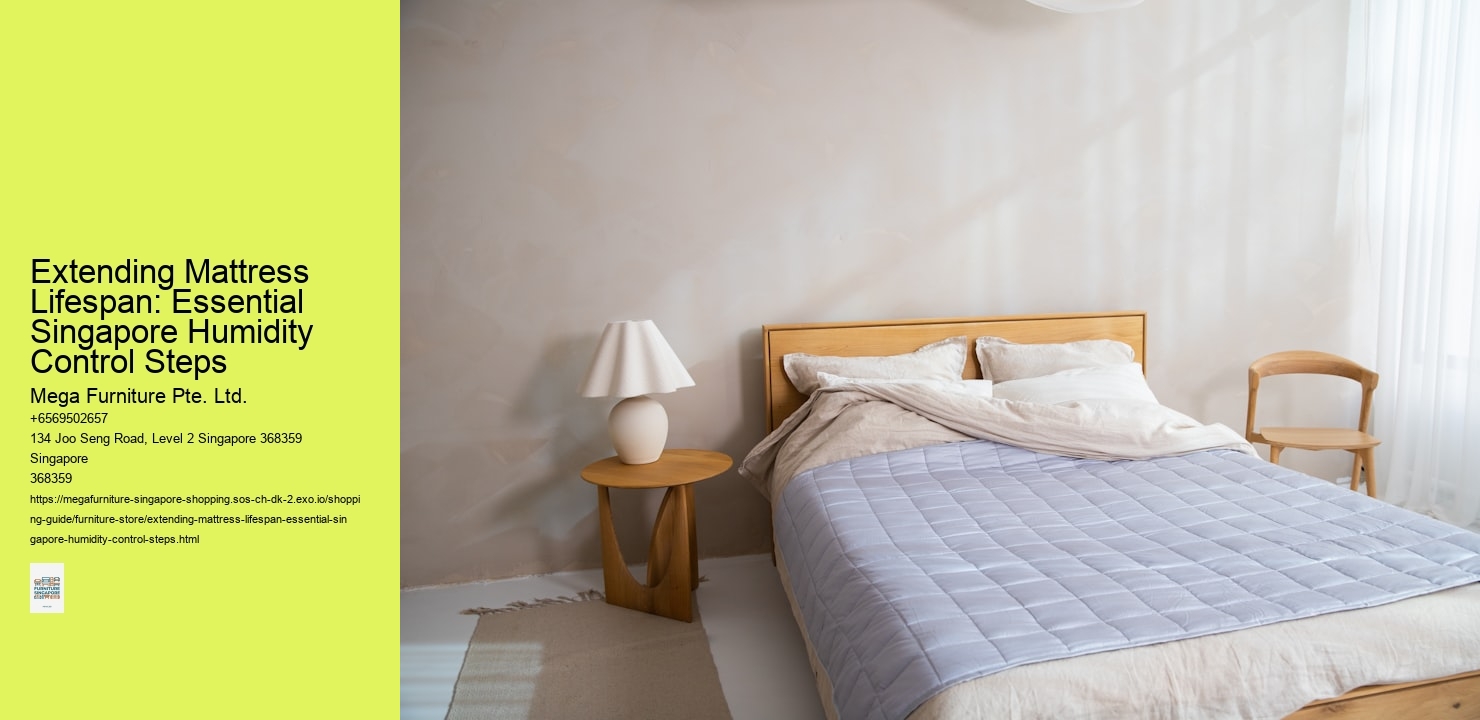
Singapore averages eighty percent humidity year round, forcing mattress manufacturers to use breathable materials. This moisture level requires readers to focus on airflow gaps within the bedroom design, particularly in 3-room HDBs where layout constraints often trap stagnant air. A Queen mattress measures 152 by 190cm, which fills a 12 sqm room quickly. You must leave space for circulation. In a typical 3-room master bedroom, the bed frame alone blocks the path from the door to the window. Moisture gets trapped against the wall, creating a hidden risk for fabric rot.
Check for air conditioning placement and dehumidifier usage near sleeping areas to maintain optimal conditions. Position the AC so the air circulates around the bed frame, not just through the mattress—this prevents cold spots. If the AC unit is installed too high, the cool air falls to the floor without circulating over the mattress surface, leaving the top layer warm and damp. There's no single best mattress — only the best one for how you sleep, in a climate that punishes the wrong choice. The honest filter for the best mattress in Singapore starts with our weather: high humidity and warm nights mean breathability and temperature regulation matter as much as support, so a mattress that feels perfect in a cold country can sleep sticky and hot here. The main constructions each suit a different sleeper — memory foam contours and relieves pressure for side sleepers but can trap heat unless it's cooling-gel or open-cell; pocket spring gives bounce and motion isolation for couples; hybrid combines coils for airflow with foam or latex on top, which is why it's the popular all-rounder for hot, shared beds. Firmness matters too: a medium-firm mattress is the common recommendation locally, supporting the spine without letting you sink in and trap heat. The real test is lying on it for a few minutes in each sleeping position — that feel test beats any spec sheet.. Keep the unit on a stand to avoid floor moisture, which is where dampness accumulates first.
Focus on airflow gaps first. Material breathability is secondary to actual air movement, yet many buyers prioritise fabric specs over room layout. The one exception is a room with a built-in wardrobe; here solid panels help seal moisture out. Don't ignore the wall gap behind the headboard—it creates a pocket where mould grows silently. Inspect the area every month.
Most mattresses in Singapore start developing a permanent dip within the first couple of years of daily use. That’s the hidden cost of skipping the quarterly turn. You wake up with a sore back, blaming the model, when the real issue is a worn-out pocket spring. It happens often faster in high-rise units where ventilation is often poor.
Rotate the mattress every three months. Do it before the monsoon hits, typically around November or December. Humidity makes foam softer, so even wear matters more then. You need space for a thirty-degree shift without dragging the headboard across the tiles. A Queen mattress measures 152 by 190cm, so check your corner clearance first. If the bed frame locks it flat, that’s a design flaw you should have spotted earlier. Most 4-room BTO master bedrooms have the space, but you must clear the walkway.
Some shoppers think rotation only applies to expensive latex. That one is wrong. Rotation extends life regardless of price point. Just ensure you got room to turn it, lah. A simple 30-degree turn is enough to shift the weight off the spine area. Don’t wait until the sag is visible to the naked eye. You might save a few hundred dollars by doing this instead of buying a new one. Why pay for a replacement if a quarter-turn fixes it?
Standard cotton blends absorb moisture quickly. High humidity makes them a breeding ground for spores. You'd look for performance velvet instead. It repels water better than natural fibres of any colour. Check the weave density carefully. That one really matters lah.
Wicking capability matters more than you think. It's trapped in poor materials. Sintered sand helps pull dampness away. Your skin stays drier throughout the night. Ventilation becomes unnecessary — if the fabric works.
Airflow prevents trapped water inside core layers. Breathable weaves allow moisture vapour to escape. Closed cells hold humidity against your back. Open structures let the air circulate freely. This simple change stops mould from forming.
Synthetic blends often cost less initially. They resist stains and mildew effectively. Natural fibres rot faster in tropical weather. Don't overlook long-term durability over low price. Budget buyers might overlook this trade-off.
Cleaning routines extend fabric life significantly. Spot clean spills immediately. Don't soak the mattress cover. Hot water shrinks some materials dangerously. Follow the label instructions closely.
A spilled glass of sweetie tea in a 12 sqm bedroom is an invitation for bacteria now. You buy a Queen 152 by 190cm frame for value, not just for sleep so every drop counts here and there. That moisture sits deep in the core. It grows black spots quickly before you realise the structural damage is actually permanent. Most cheap foam absorbs liquid like a sponge and holds it tight inside a small HDB flat for many slow months.
Blot gently with dry cloth immediately after the spill. Do not soak the mattress during the monsoon — drying takes days when humidity hits 80%+. A damp cloth with mild soap is okay for surface marks only. Avoid scrubbing hard because the fabric will pill one eventually under tension. Soaking the mattress? You cannot do it. You soak it, it dries slow. The year-end monsoon is the absolute worst time to risk a heavy clean on fabric cover.
Dry the area with a fan or dehumidifier straight away. This one protects your mattress investment against the tropical heat and damp. You can ignore this already, but then the whole unit rots early. Some beds get mould in the rainy months regardless of brand quality or price point here lor. Just spot clean and blow dry with a fan force. You save significant money on expensive premature replacements.
Hydraulic lift-up beds are ideal for HDB flats where extra luggage storage is needed. These designs require overhead clearance to function smoothly without hitting ceiling lights or beams. Drawers underneath offer another option but need floor clearance to slide in and out easily. Consider the total height of the bed plus mattress when planning your room layout.
Most HDB master bedrooms accommodate a standard queen size measuring 152cm by 190cm comfortably. Leave about 60cm clearance on the exit side to ensure easy movement around the bed frame. A super single bed fits snugly in smaller common rooms where space is tight. Measure your room first to avoid ordering a king size that won't fit through the lift.
Online specs lie about comfort. A cotton cover feels different in a humid HDB flat compared to a dry showroom. You check the Somnuz® weave at Joo Seng or Tampines to see how the fabric breathes against your skin during the monsoon season, which is critical for longevity. Humidity, that one really affects foam density over time. Testing firmness physically prevents regret later. Most people buy online without feeling the material, then find the bed too hot.
Sit on the mattress for five minutes. This ensures the springs don't feel too hard. Megafurniture delivery teams know specific condo lift restrictions better than online chatbots, because they handle the logistics daily and know the door widths for sure every time. A Queen size fits most master bedrooms, but oversized pieces might need staircase carrying. Get the delivery team to confirm the lift door width is enough before buying. A rigid frame won't bend like a flexible mattress into a tight lift, so you must check the dimensions. HDB lift interior is roughly 124cm wide – but the door is the real limit.

Physical testing ensures the product handles local humidity better than online specs alone, which is why you should always test before committing to the purchase decision. You want to avoid a mattress that sags over time. Megafurniture showrooms let you verify the build quality directly. There's a limit to what you can learn from a website. Visit the centre to feel the difference yourself. The exception is when you already know your size.
Humidity often sits above eighty percent here. Cooling layers survive heavy monsoon rains provided the fabric breathes properly. Memory foam mattresses suit three-room BTO apartments with poor ventilation — yet mould growth remains a genuine risk without proper airflow to circulate the air inside the room itself. Heavy researchers should verify cooling layers withstand humidity levels above eighty percent during the wettest months before committing to a purchase decision for their specific bedroom layout. Top-rated mattresses available in Singapore usually specify their humidity resistance rating.
Warranty claims get tricky with moisture damage. Warranties usually cover frame and defects, not fabric wear, sagging, or humidity damage within three years so buyers must check terms because expect rejection if water seeps through the top cover. Moisture damage falls outside standard coverage protocols and is rarely covered. Read the warranty document carefully before signing the purchase order. Do not assume all brands honour the same moisture clauses in their written policy.

Delivery teams face tight corridors. HDB lift door opening measures only ninety centimetres wide. Delivery teams handle tight corridor turns at HDB stairs during bad weather conditions affecting home access, though staircase carrying often incurs a surcharge because corridor turns become problematic during slippery conditions. Flexible mattresses bend into a lift a rigid frame cannot. Leave a two to five centimetre buffer for skirting. Oversized pieces may need staircase carrying or a hoist.
The deposit slip sits on the counter, waiting for a signature. It looks harmless enough. But the real risk hides in the fine print. Most buyers rush through the paperwork without realising the standard terms exclude moisture damage entirely. That moment of signing transfers ownership, but not necessarily the protection you need.
Singapore humidity sits around 80% plus year-round. It's not just water; it's the air. A generic international policy will not cover this. You need explicit coverage written in the document. If the warranty text says climate controlled only, walk away. That clause kills the longevity of the foam inside. Latex degrades faster when exposed to sustained dampness without ventilation.
Delivery team must hand over the warranty card. Do not accept the mattress without it. Got the card or not? Ask until you hold it. Some brands explain protection against moisture on this form. Others leave it vague. The difference matters when the monsoon hits. A 152 by 190cm Queen fits most HDB master bedrooms, but the warranty must match the room's ventilation capacity.
The warranty is non-negotiable. The cheapest mattress price means nothing if the warranty voids due to humidity. A warranty card explaining protection against moisture is the only proof. Don't sign the deposit until this is clear. The deposit is refundable only if the terms are unacceptable. If you are moving overseas next month, the warranty matters less, but for a permanent home, the clause is everything.
" width="100%" height="480">Extending Mattress Lifespan: Essential Singapore Humidity Control Steps